

Last updated: January 2026 (reflects ABP 2026 Exam Content)
Author: Ashish Goyal, MD
Introduction
Need a complete guide to the 2026 MOCA-Peds exam?
Quick Links (Jump to Section)
You’re in the right place. This page includes:
- The full ABP-published learning objectives for 2026
- All 4 official featured readings with direct links
- A printable 1-page checklist to help you stay organized
- Quick study guidance (so you don’t waste time)
I’m Dr. Ashish Goyal, a board-certified pediatrician and founder of Pediatrics Board Review (PBR). Since 2011, I’ve helped thousands of pediatricians prepare for board certification and navigate MOCA-Peds efficiently.
Below you’ll find the complete official 2026 learning objective list (ABP), the featured readings, and a printable 1-page checklist so you can track progress quickly without wasting time.
This page is built as a MOCA-Peds cheat sheet for busy pediatricians and follows the official ABP 2026 MOCA-Peds exam content outline.
Quick Answers (2026 MOCA-Peds Learning Objectives)
- Total learning objectives: 45
- Featured readings: 4
- Official source: ABP 2026 MOCA-Peds Exam Content
- Best way to use this page: Download the checklist + read 4 concise learning objective summaries per week + take your exam at the end of the quarter
Download the One-Page Checklist (Fastest Way to Stay Organized)
Most pediatricians searching this phrase want to save the list quickly and move on.
Download the 1-Page Checklist (PDF)
Print-friendly – grouped by topic – includes checkboxes – designed for quick weekly tracking
About MOCA-Peds Learning Objectives and Featured Readings (2026)
The 2026 MOCA-Peds (Maintenance of Certification Assessment for Pediatrics) learning objectives and featured readings have been published by the ABP and serve as the foundation for preparation.
Each year, the ABP releases updated learning objectives and featured readings ahead of the MOCA-Peds assessment year. This early release allows pediatricians to begin preparing for topics they may not encounter regularly in practice.
Throughout the year, MOCA-Peds delivers up to 20 questions per quarter, which are drawn from the learning objectives and featured readings. These questions represent the breadth of pediatric knowledge, though not all objectives may be directly assessed.
How PBR Helps Pediatricians Navigate MOCA-Peds (2026)
In 2018, I became the first person in the country to create a study guide for MOCA-Peds. Every year since then, when the ABP releases its learning objectives and featured readings, I begin developing comprehensive content for each topic.
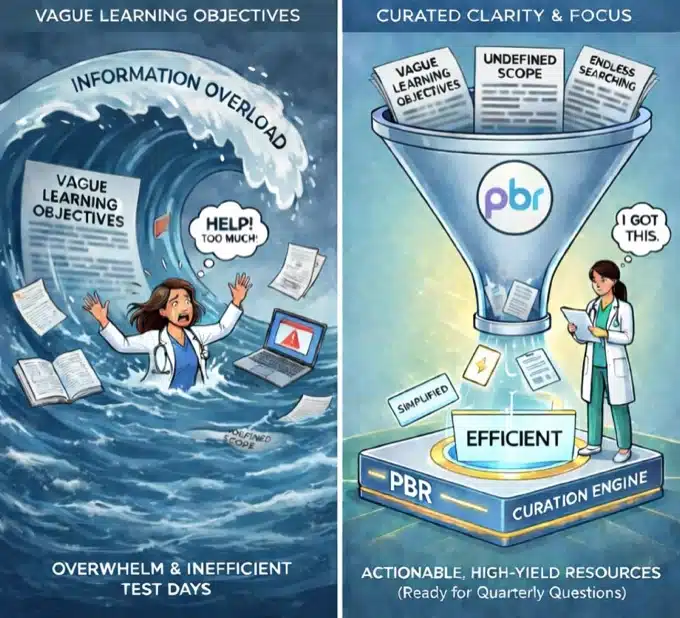
I aim to create topic summaries that are no more than three to five pages long. These summaries include the highest-yield and most testable content, guided by years of experience helping thousands of pediatricians attain and maintain board certification.
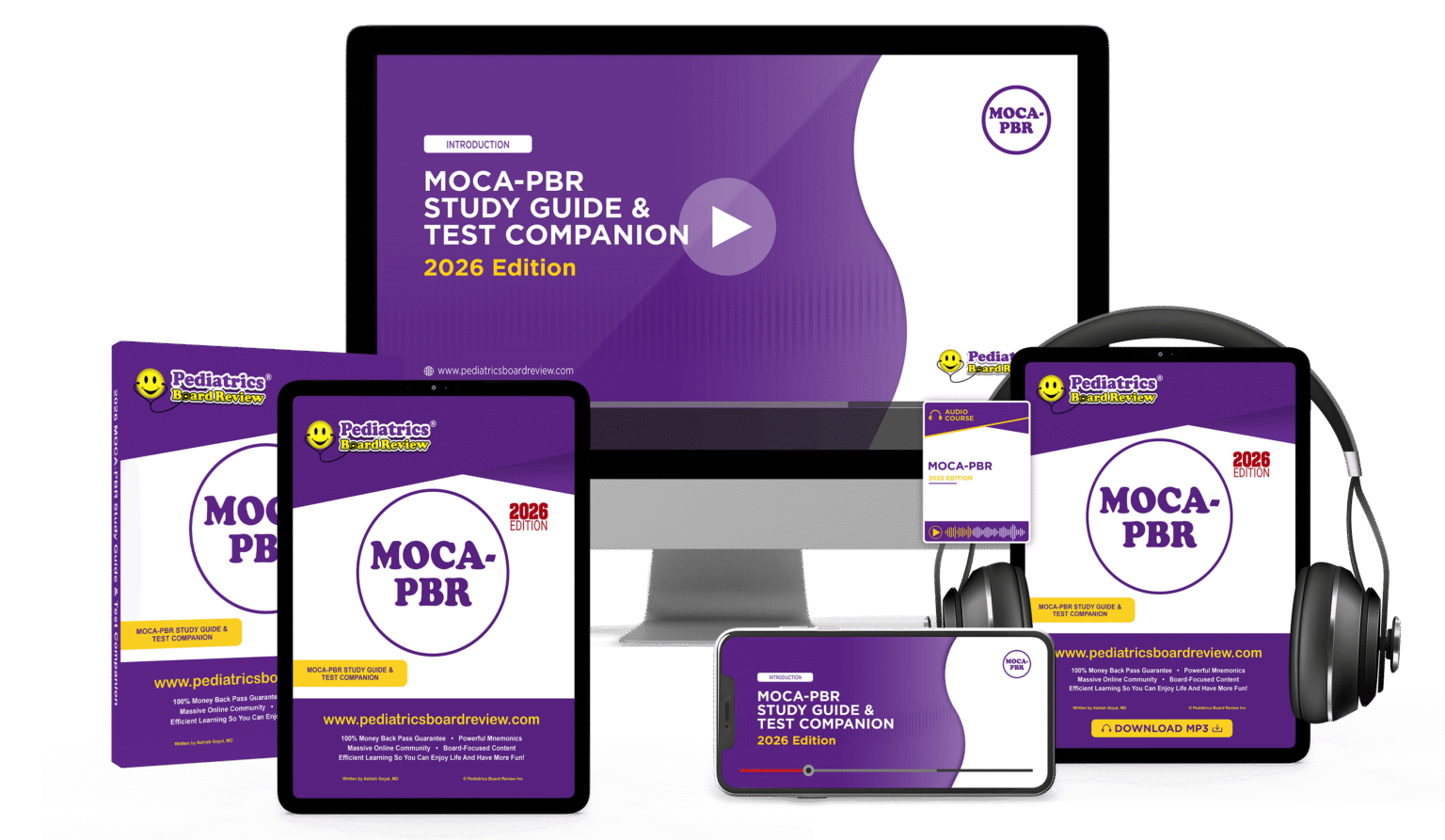
The results have been tremendous and are deeply appreciated by the general pediatrician community. It is rewarding to not only deepen my own understanding of the current world of pediatrics but also to support other pediatricians. I believe so strongly in your ability to succeed with the MOCA-PBR Study Guide & Test Companion that I offer a quarterly pass money-back guarantee.

My Pro Tips for MOCA-Peds Questions (2026)
Plan Ahead
Review the 45 learning objectives and 4 featured readings before starting Quarter 1. Even a quick scan helps you identify weaker areas early. If you prefer a more structured approach, use tools like PBR’s Quick Search Feature to move faster during timed questions.
Study in Small Weekly Wins
Instead of cramming at the end of the quarter, build momentum with a simple plan: focus on approximately 4 learning objectives per week. MOCA-Peds becomes dramatically less stressful when your progress is consistent, even if your weekly study time is short.
Use MOCA-Peds Like a Learning Tool (Not Just an Assessment)
MOCA-Peds provides feedback and explanations that are extremely valuable. Pay special attention to the questions you answered confidently but still missed. Those are often your highest-yield learning gaps and can show up again later in the year.
Don’t Ignore Featured Readings
You can defer preparation for featured reading questions, but not for long. MOCA-Peds featured reading questions begin appearing in Quarter 2 and can continue in any later quarter. Featured readings can be as long as 100 pages. The shortest 2026 MOCA-Peds featured reading is 12 pages, and the longest is 39. Review the MOCA-PBR featured reading topic summary and scan the full featured reading (link provided within the MOCA-PBR).
Approach Exam Day Strategically
MOCA-Peds is so much easier when you do a few simple things on the exam day. Log in to MOCA-PBR, UpToDate, and Pediatrics In Review. Take 5 minutes to simply scan the learning objectives and featured reading titles before you start to answer questions for the biggest quick win (more details available through our members-only MOCA-PBR Blueprint).
What’s Different / High-Yield / Easy-to-Miss in 2026
The 2026 MOCA-Peds learning objectives are broader than the 2025 learning objectives, clinically grounded, and action-oriented. Many objectives are framed as real-world tasks (recognize, evaluate, manage, counsel) rather than isolated fact recall. This means your prep should focus less on memorizing trivia and more on clinical reasoning, risk stratification, and choosing the best next step.
Important note: The ABP does not publicly “weight” objectives. However, based on common MOCA-Peds question style, the themes below often generate high-stakes, high-nuance questions, especially when one detail changes management.
High-Yield themes to pay close attention to in 2026
Communication & professionalism
These objectives show up as “soft skills,” but often become high-impact when tied to medical decision-making:
- Delivering difficult news with clarity and compassion
- Establishing goals of care and shared decision-making
- Advance care planning and end-of-life discussions
Patient safety & systems-based practice
Expect scenarios that test what you do in the real workflow, not just what’s “ideal”:
- Recognizing barriers to detecting and reporting patient safety events
- Understanding how safety breakdowns occur in clinical systems
- Thinking beyond the diagnosis (handoffs, follow-up failures, care coordination risk)
Growth & developmental surveillance
Several objectives require comfort with normal vs atypical development across ages:
- Early infancy development (0-12 weeks): milestones + red flags
- Preschool development: behavior concerns, speech/language, social-emotional concerns
- Knowing when reassurance is appropriate vs when evaluation is needed
High-stakes “must-not-miss” clinical scenarios
These are classic MOCA-style “one wrong step changes everything” situations:
- Diabetic ketoacidosis (DKA): recognition and initial management priorities
- Neonatal cyanosis or respiratory distress: rapid differential + first steps
- Child abuse and neglect: recognizing findings, distinguishing from accidental trauma, and knowing how to act appropriately
Adolescent medicine nuance
Several learning objectives emphasize cognitive development and identity-aware care:
- Adolescent cognitive/social/emotional development and decision-making
- Caring for nonbinary and transgender adolescents (supportive, appropriate evaluation + management)
- Eating disorders: diagnosis, evaluation, and risk stratification for higher-risk presentations
Easy-to-miss (but testable) 2026 objectives
These may not feel “high drama,” but they’re common test material because they show up constantly in practice:
Prevention & health maintenance
- Infant safety counseling (car seats, safe sleep, secondhand smoke exposure)
- Age-appropriate screening (vision, hearing, BP, oral health risks)
- Pre-participation sports evaluations + contraindications to play
- Current immunization recommendations
Infectious diseases & infection control
Don’t ignore these. The amount of testable material is vast because the topics are so broad:
- Infection control principles (childcare, school, inpatient/outpatient settings)
- Common fungal infections: presentation, diagnosis, management
- Common mycobacterial infections: presentation, diagnosis, management
- Opportunistic infections in immunocompromised patients
Common-but-tricky outpatient complaints
These appear “basic,” but questions often hide key differentiators:
- Constipation: differential + evaluation + management
- Esophageal symptoms (dysphagia, GERD)
- Allergic rhinitis
- Rashes in neonates related to infection
- Syncope evaluation and risk stratification
2026 MOCA-Peds Learning Objectives (Complete List)
Below is the complete 2026 objective list:
- Apply effective communication strategies when delivering difficult news, establishing goals of care, or planning advanced or end-of-life care.
- Counsel patients and families about safety and injury prevention pertaining to infants (eg, car seats, safe sleep, secondhand smoke exposure).
- Diagnose, evaluate, and manage eating disorders.
- Recognize and evaluate findings of physical child abuse and distinguish from accidental trauma.
- Recognize and manage non-asthmatic conditions of the lower airway that can present with cough, wheezing, or respiratory distress (eg, pulmonary artery sling, bronchitis, bronchiolitis).
- Recognize and manage patients with liver and other organ failure.
- Recognize and plan the management of a child with diabetic ketoacidosis.
- Recognize barriers to detecting and reporting patient safety events.
- Recognize the presentation, differential diagnosis, evaluation, and treatment of common movement disorders in children (eg, provisional tic disorder, Tourette syndrome, restless legs syndrome).
- Recognize the presentation, evaluation, and management of genetic forms of kidney disease.
- Recognize the signs and understand the impact of neglect on children.
- Recognize, evaluate, and manage both normal and atypical growth and development of a 0- to 12-week-old infant (eg, physical, social, emotional, language, gross motor, fine motor).
- Recognize, evaluate, and manage both normal and atypical growth and development of a preschool-age child (eg, physical, social, emotional, language, gross motor, fine motor).
- Recognize, evaluate, and manage symptoms related to diseases of the esophagus (eg, dysphagia, gastroesophageal reflux disease).
- Recognize, evaluate, and treat opportunistic infections in a patient who is immunocompromised.
- Understand and evaluate nonbinary and transgender adolescent patients.
- Understand and manage age-appropriate medical screenings (eg, vision, hearing, blood pressure, oral health risks).
- Understand and manage pre-participation evaluations (including recognition of contraindications for participation) for athletes and counsel patients appropriately.
- Understand current immunization recommendations.
- Understand principles of infection control in various settings (eg, childcare center, school, hospital/clinic).
- Understand the clinical presentation, diagnosis, and management of common fungal infections.
- Understand the clinical presentation, diagnosis, and management of common mycobacterial infections.
- Understand the clinical presentation, differential diagnosis, evaluation, and management of constipation.
- Understand the cognitive, social, and emotional development that occurs during adolescence and its impact on decision-making.
- Understand the diagnosis, evaluation, and management of cystic fibrosis.
- Understand the differential diagnosis, evaluation, and initial management of a child with a pituitary disorder.
- Understand the differential diagnosis, evaluation, and initial management of neonates with cyanosis or respiratory distress.
- Understand the differential diagnosis, evaluation, and management of allergic rhinitis.
- Understand the differential diagnosis, evaluation, and management of autism spectrum disorder and comorbid conditions.
- Understand the differential diagnosis, evaluation, and management of coagulation disorders.
- Understand the differential diagnosis, evaluation, and management of diseases and disorders of the meninges and spinal cord (infectious, inflammatory, anatomic).
- Understand the differential diagnosis, evaluation, and management of rashes caused by or related to infections in the neonate.
- Understand the differential diagnosis, evaluation, and management of syncope.
- Understand the differential diagnosis, evaluation, and management of testicular scrotal mass (eg, varicocele, tumor).
- Understand the familial risk factors, diagnosis, and management of dyslipidemias.
- Understand the medical risks and complications unique to newborn size or gestational age (eg, small for gestational age, large for gestational age, late preterm, etc).
- Understand the presentation, differential diagnosis, and evaluation of connective tissue disorders that present with hypermobility (eg, Ehlers-Danlos syndrome, Marfan syndrome, benign hypermobility syndrome).
- Understand the presentation, evaluation, and care of patients with specific gene mutations (eg, fragile X syndrome, Marfan syndrome, achondroplasia).
- Understand the presentation, evaluation, and management of acne.
- Understand, evaluate, and manage nutritional needs for patients with dietary restrictions (eg, vegetarian, vegan, gluten free).
- Understand, evaluate, and manage orthopedic disorders and injuries of the elbow (eg, nursemaid’s elbow, medial epicondyle apophysitis).
- Understand, evaluate, and manage psychosocial issues related to the impact of illness (eg, chronic illness/disability).
- Understand, evaluate, and manage structural/anatomic diseases, disorders, and conditions of the ear.
- Understand, evaluate, and manage structural/anatomic diseases, disorders, and conditions of the eye.
- Understand, evaluate, and manage trauma/injury of the mouth, oropharynx, and throat.
2026 Featured Readings (High-Yield)
The ABP featured readings matter because they often signal what the ABP expects pediatricians to stay current on, especially when new guidelines or updated standards of care can influence clinical decision-making.
In practice, questions based on featured readings begin appearing in Quarter 2 and may continue showing up in any later quarter. That’s why it’s smart to bookmark these early (even if you don’t study them immediately).
2026 MOCA-Peds Featured Readings (ABP)
Source: ABP 2026 MOCA-Peds Exam Content
In MOCA-PBR, I summarize and integrate the featured readings into easily understandable, high-yield clinical takeaways that are most likely to be tested during your timed MOCA-Peds questions.
Quick Points: How MOCA-Peds Tests These Objectives
The MOCA-Peds format is designed to test real-world pediatrics, not just memorization. The most successful approach is to think like you’re in a clinic or on call: identify what matters, rule out danger, and choose the best next step.
Pattern #1: “Best NEXT step” beats trivia
MOCA-Peds questions often reward recognition, what to do first, what to do next, and when to escalate care.
Instead of focusing on rare facts, focus on clinical reasoning:
- What diagnosis is most likely?
- What step changes management today?
- What would be unsafe to miss?
Pattern #2: One detail changes the answer
Many MOCA-Peds questions include a single key detail that flips the correct choice. Common “pivot points” include:
- age cutoffs (newborn vs infant vs adolescent)
- red flags / warning signs
- severity clues (toxic appearance, instability, dehydration)
- risk stratification (high vs low risk patients)
- safety + reporting decisions (abuse/neglect, patient safety events)
Pattern #3: Speed matters (even in open-book exams)
Even though MOCA-Peds offers an open-book approach, the clock still matters. The goal isn’t to look up everything…it’s to confirm efficiently.
A good strategy is to know:
- what you already understand confidently
- what you should quickly verify
- what’s not worth chasing during a timed question
How to Use This List to Study Efficiently (Simple Plan)
- Step 1: Print the checklist and highlight your weakest 10 objectives.
- Step 2: Do 4 objectives per week (that’s major progress).
- Step 3: Defer featured readings to Quarter 2.
- Step 4: Track questions you rated with high confidence but missed because those are likely to repeat and are high-ROI reviews.
Why Choose MOCA-PBR?
For me, MOCA-Peds represents the future of meaningful professional growth.
It’s not just about answering questions correctly…it’s about staying sharp, staying current, and protecting a standard of care delivered to children and families.
The challenge is that MOCA-Peds can feel overwhelming in real life. The learning objectives are provided in advance, but are broad. The questions are timed, and the “best answer” often depends on one clinical detail.
Most pediatricians don’t struggle because they aren’t smart.
They struggle because they don’t have a streamlined system to study curated, testable information, or they resort to panicked online searches.
That’s exactly why I created MOCA-PBR.
With the MOCA-PBR Study Guide & Test Companion, a Quick Search Feature, and a focus on efficiency, you can approach MOCA-Peds with more confidence, less stress, and a clearer plan, quarter by quarter.
Stop guessing and start preparing with structure. Explore MOCA-PBR and let Team PBR be your partner in success.
Have questions? My team is happy to help you choose the right path for your situation.
Optional: Free Resources + Next Steps
Want free 2026 MOCA-Peds topic summaries?
Download these free high-yield MOCA-Peds topic summaries (PDFs):
- Allergic Rhinitis – Differential Diagnosis, Evaluation, and Management
- Ankyloglossia (Featured Reading) – Identification and Management (and its effect on breastfeeding in infants)
- Child Abuse (Physical) – Recognize and Evaluate Findings of Physical Child Abuse and Distinguish from Accidental Trauma
- Diabetic Ketoacidosis – Recognize and Plan the Management of a Child with Diabetic Ketoacidosis
- Mycobacterial Infections – Clinical Presentation, Diagnosis, and Management of Common Mycobacterial Infections
FAQ: 2026 MOCA-Peds Learning Objectives & Featured Readings
How many objectives are in the 2026 MOCA-Peds cycle?
The ABP lists 45 learning objectives and 4 featured readings for the 2026 MOCA-Peds cycle.
Do I need to memorize the objectives?
No. Use the learning objectives as a roadmap to prioritize weak areas and avoid wasting time studying low-yield material.
What should I do first if I’m behind?
Download the checklist, highlight your weakest learning objectives, and review four MOCA-PBR topic summaries per week to build momentum and consistency.
What are the 2026 MOCA-Peds featured readings?
The ABP featured readings for 2026 include:
- Identification and Management of Ankyloglossia and Its Effect on Breastfeeding in Infants (Clinical Report)
- Atopic Dermatitis (Eczema) Guidelines: 2023 AAAAI/ACAAI Joint Task Force Recommendations (GRADE- and Institute of Medicine-based)
- Opioid Prescribing for Acute Pain Management in Children and Adolescents in Outpatient Settings (Clinical Practice Guideline)
- Clinical Practice Guideline for the Assessment and Treatment of Children and Adolescents With Major and Persistent Depressive Disorders
When do featured reading questions show up in MOCA-Peds?
Featured reading questions begin appearing in Quarter 2 and may continue showing up in any later quarter. It’s best to bookmark or download them early so you’re not scrambling later.
Are all 45 objectives tested each year?
Not necessarily. The learning objectives represent the full scope of content for the year, but MOCA-Peds questions are drawn from both the learning objectives and featured readings, so some learning objectives may be tested more than others.
What makes MOCA-Peds questions feel harder than they look?
Many MOCA-Peds questions are designed around the identification of disorders not commonly seen in practice and “next-step” decision-making. One small clinical detail (age, severity, red flag, risk level, or safety concern) can completely change the correct answer.
What’s the best way to study for MOCA-Peds without cramming?
The simplest plan is:
- print the checklist
- get MOCA-PBR
- pick 4 objectives per week
- review missed questions and explanations each quarter before your next exam day