

The ABP exam is not just about how much you study. It is about understanding which topics matter most, where the exam places the most weight, and how to approach preparation in a structured and efficient way. Some pediatric board topics require deeper clinical reasoning, appear more frequently, and carry greater impact on your final score. Recognizing these high-priority areas early helps you focus your time where it truly matters.
A clear study direction keeps your preparation aligned with how the exam is actually designed. Instead of covering everything equally, a smarter approach focuses on what drives results and builds strong pattern recognition over time. When you understand exam priorities from the beginning, your study plan becomes more focused and effective. In this guide, we will break down the most important topics and show how to approach them with a clear, high-yield strategy.
Why Knowing the Highest-Priority Topics Gives You a Real Advantage
Many candidates begin board preparation by giving equal attention to every subject. While this approach feels organized, it does not reflect how the exam is actually structured. Some topics appear more often, require more precise decision-making, and carry greater weight in scoring.
When you understand which areas matter most, your preparation becomes more focused and efficient. You are no longer just covering content. You are building the exact skills the exam is designed to test. This shift in approach helps you use your study time better and improves your ability to recognize patterns quickly during clinical questions.
Key benefits of focusing on high-priority topics:
- Better time allocation — spend more hours on high-weight, high-impact domains
- Stronger pattern recognition — repeated exposure improves decision-making speed
- More efficient preparation — focus on what drives the most marks
- Improved exam confidence — clear direction reduces uncertainty
- Higher return on effort — smarter prioritization beats random coverage
What Is the American Board of Pediatrics (ABP) Certification Exam?
The ABP Initial Certification Exam is the final credentialing step for pediatricians who have completed accredited residency training. It tests whether you have the foundational knowledge to practice safely and independently across the full breadth of general pediatrics.
This is not a memorization test. The ABP is evaluating clinical reasoning, your ability to apply what you know to real patient scenarios, and your performance under time pressure.
Pediatric Board Exam Format and Question Design
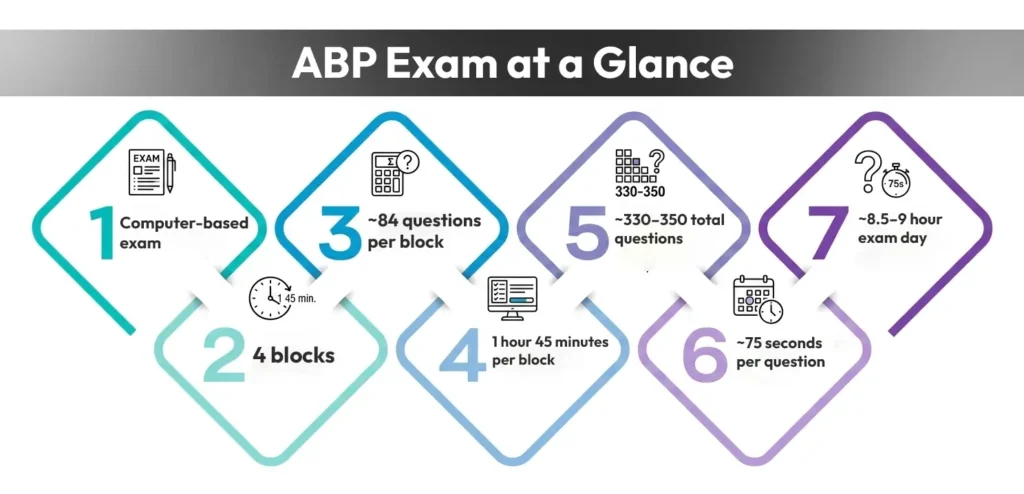
Here is what you are working with on exam day:
| Component | Details |
|---|---|
| Exam Type | Computer-based Initial Certification Exam |
| Administered By | American Board of Pediatrics (ABP) |
| Format | Multiple choice, single best answer |
| Number of Blocks | 4 (A, B, C, D) |
| Questions Per Block | ~84 questions |
| Time Per Block | 1 hour 45 minutes |
| Total Questions | ~330-350 |
| Time Per Question | ~75 seconds |
| Total Exam Day | ~8.5-9 hours including breaks |
Every question is a standalone clinical vignette. You get a patient presentation and must identify the diagnosis, next best step, or most appropriate management, all within about 75 seconds.
How Exam Weighting Shapes Your Study Priorities
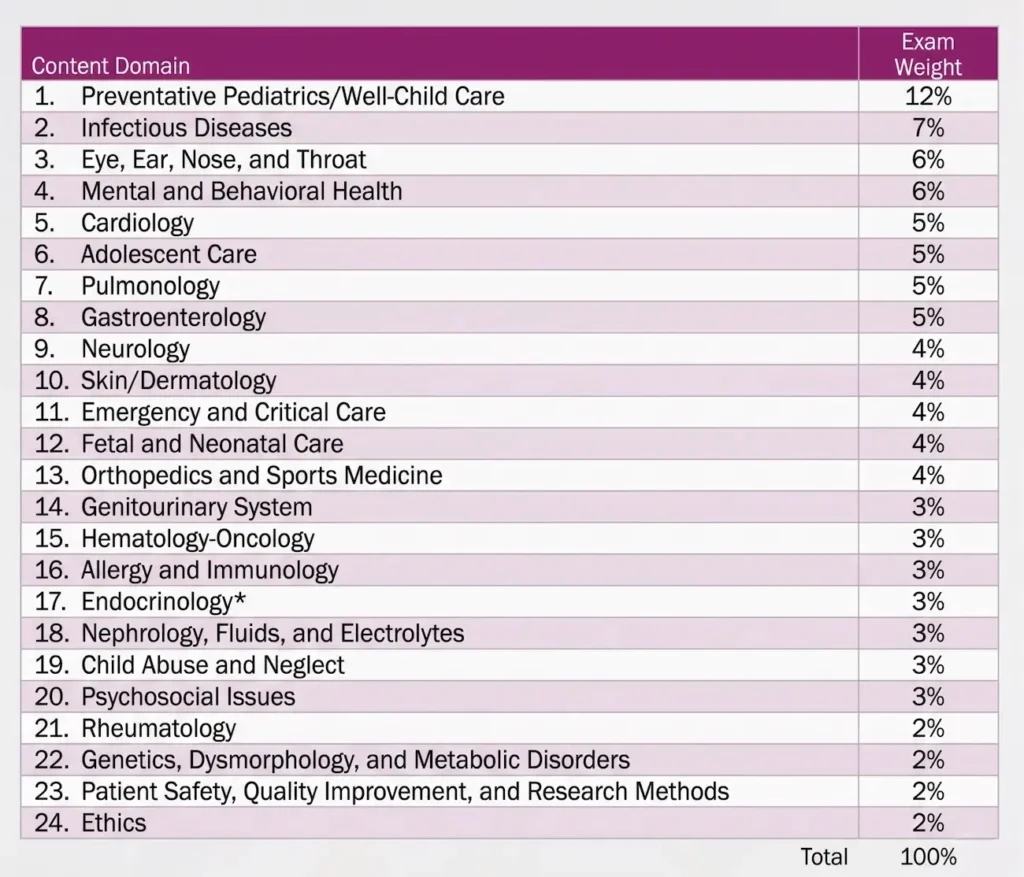
The ABP publishes a content outline listing the domains tested on the exam. What it does not make obvious is how much weight each domain carries. That weighting matters enormously for how you allocate study time.
Spending equal hours on every topic sounds fair. It is not. A domain representing 15% of your exam deserves far more time than one representing 3%. Understanding relative domain weight is the foundation of smart pediatric board preparation.
The ABP Content Outline: What the Pediatric Board Exam Covers
Most candidates start preparing for the pediatric boards with one big mistake: they treat the exam like a list of random topics.
It is not.
The entire exam is built on a structured blueprint created by the American Board of Pediatrics called the General Pediatrics Content Outline. This outline tells you exactly what is tested and how much it matters. If you do not understand this first, your study plan will always feel scattered.
What the ABP Is Actually Testing
The pediatric board exam is designed to reflect real-world pediatric practice, not textbook memorization.
That means you are expected to:
- Recognize clinical patterns
- Make decisions under pressure
- Connect multiple systems in one case
- Apply knowledge, not just recall it
So, instead of thinking in isolated subjects, think in clinical scenarios.
The Full Scope of the Exam
The ABP content outline covers the entire spectrum of pediatrics. This includes everything from routine care to high-acuity conditions.
At a high level, the exam includes:
Foundational Care
This is where a large part of pediatrics lives:
- Preventive care and well-child visits
- Growth and development
- Behavioral and mental health
- Adolescent medicine
Early-Life Medicine
You will be tested heavily on newborn care:
- Fetal and neonatal medicine
- Newborn complications
- Early-life physiology
Core Clinical Systems
These are the major disease-based domains you see in practice:
- Infectious diseases
- Cardiology (including congenital heart disease)
- Pulmonology
- Gastroenterology and nutrition
- Nephrology and fluid/electrolyte balance
- Neurology
- Endocrinology
- Hematology
- Oncology
- Dermatology
- Allergy and immunology
- Musculoskeletal and rheumatology
Acute and High-Stakes Care
These questions test how you think under pressure:
- Emergency medicine
- Critical care
Professional and Integrated Areas
These are often underestimated but still tested:
- Child abuse and neglect
- Psychosocial factors
- Ethics and professionalism
- Patient safety and quality improvement
Where the Exam Weight Actually Sits
Here is where most candidates get it wrong.
Not all topics are equal. The ABP assigns different weights to each domain, which directly affects how often they appear on the exam.
In practical terms:
- Some domains show up again and again (core clinical and foundational areas)
- Some are moderate frequency but high value
- Some are lower frequency but still testable
That difference is everything when building your study plan.
If you give equal time to everything, you lose efficiency.
Key takeaway:
The ABP content outline is not just information. It is your study strategy. If you follow it properly, you stop guessing what to study and start focusing on what actually matters.
What Makes Certain Pediatric Board Topics More Difficult?
Not all hard topics are hard for the same reason. Understanding why helps you address each one correctly.
Volume of detail. Infectious diseases requires holding a large number of organisms, presentations, and treatment protocols in your head simultaneously.
Overlapping presentations. Neonatology and neurology both involve conditions that can look clinically similar on the surface. Precise pattern recognition, not general familiarity, separates a right answer from a wrong one.
Low clinical exposure. Many residents see limited genetics or metabolic disease cases during training. When foundational knowledge is not built through clinical experience, board content feels abstract and hard to retain.
Complex physiology. Cardiology is notoriously difficult because congenital heart disease requires reasoning through hemodynamics, not just recognizing disease names.
High-stakes time pressure. Emergency and critical care questions test rapid decision-making. Even solid knowledge breaks down under a 75-second clock if you have not trained your pacing. Our guide on test-taking strategies for medical board exams covers exactly how to train for this.
The Hardest Topics on the Pediatric Board Exam
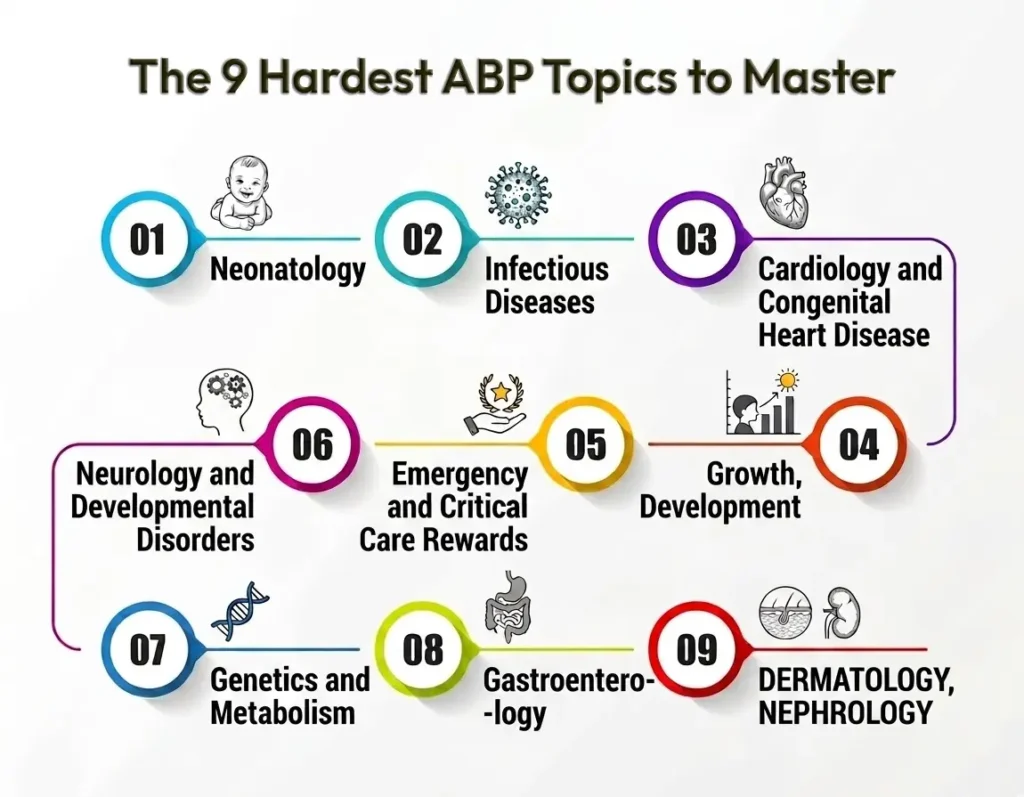
The hardest topics on the Pediatric Board Exam are not just complex. They require precise clinical reasoning and fast decision-making under pressure. Understanding these high-yield areas helps you focus your preparation where it matters most.
Neonatology and Newborn Medicine
Neonatology is one of the highest-weight domains on the ABP exam and one of the most cited areas where candidates lose points. Respiratory distress syndrome, hyperbilirubinemia, neonatal sepsis, resuscitation protocols, intraventricular hemorrhage, and hypoxic-ischemic encephalopathy are all fair game.
The difficulty is not that any single topic is impossible. It is the precision required. A question about a jaundiced newborn on day two of life tests whether you can correctly interpret bilirubin levels, identify risk factors, and select the right intervention, all from one concise vignette.
Pro tip: Study neonatology by system — respiratory, neurological, metabolic, infectious — rather than memorizing individual diseases in isolation. The ABP tests connections, not checklists.
Pediatric Infectious Diseases
Infectious diseases is content-heavy. You need to know organisms, presentations, diagnostics, and treatments across bacterial, viral, fungal, and parasitic infections, including tick-borne illnesses, vaccine-preventable diseases, and congenital infections.
The ABP does not just test whether you have heard of Rocky Mountain spotted fever. It tests whether you know the right antibiotic, the right timing, and the red flags that distinguish it from other febrile illnesses. Specificity is everything.
Pro tip: For every organism, know the classic presentation, the first-line treatment, and the one red flag that changes management. That three-part structure will carry you through most infectious disease questions.
Congenital and Pediatric Cardiology
Cardiology is consistently ranked among the most difficult domains, and the reason is physiology. Congenital heart disease requires you to reason through hemodynamic presentations, not just recognize disease names.
Acyanotic versus cyanotic defects, shunt physiology, heart failure in infants, murmur characteristics, and intervention timing are all testable. The candidates who do well here build the physiological framework first, then layer disease-specific detail on top of it.
Pro tip: Build the hemodynamic framework first. Know what happens to blood flow in each defect before memorizing disease names. Once the framework is in place, the individual conditions make intuitive sense instead of feeling like disconnected facts.
Pediatric Neurology and Developmental Disorders
Neurology covers seizure classification and management, headache evaluation, neuromuscular disorders, stroke in children, and developmental delay. Developmental pediatrics adds milestone surveillance, autism spectrum disorder, ADHD, and learning disabilities.
Neurology questions require precise clinical reasoning. Developmental questions require knowing normal ranges well enough to catch subtle abnormalities. Both reward deliberate preparation.
Pediatric Rheumatology
Pediatric rheumatology questions are difficult because the conditions — juvenile idiopathic arthritis, lupus, and vasculitis — overlap clinically and require distinguishing subtle differences in presentation and lab findings. Candidates with limited clinical exposure often confuse these entities under exam pressure.
The key is learning the one or two distinguishing features that separate each condition from the others. Build that comparison framework early and drill it with practice questions until the distinctions become automatic.
Genetics and Metabolic Conditions
For most candidates, genetics has the steepest learning curve. Residency exposure is often limited, which means the foundational knowledge has to be built almost entirely through study. The ABP tests recognizable genetic syndromes, inheritance patterns, newborn screening abnormalities, and inborn errors of metabolism.
A focused, high-yield list of syndromes studied well will always outperform broad avoidance of the domain entirely.
Pediatric Emergency and Critical Care
Emergency medicine questions test rapid decision-making, septic shock, respiratory failure, anaphylaxis, status epilepticus, trauma, and toxicology. The correct answer is not always the most comprehensive intervention. It is the most urgent one.
Candidates who do not internalize the “stabilize, diagnose, treat” framework consistently choose the right action at the wrong moment.
Hematology and Oncology
This domain tests both foundational blood disorders, including sickle cell disease, thalassemia, and bleeding disorders, and oncologic emergencies. The combination of high-stakes management decisions and nuanced lab interpretation makes it harder than its moderate exam weight suggests.
Candidates who do well here master the clinical presentations first, then layer in the management decisions. Do not try to memorize protocols before you can recognize the condition.
Pediatric Endocrinology
Pediatric endocrinology, covering diabetes management, thyroid disorders, adrenal conditions, and growth abnormalities, requires integrating lab values with clinical presentations in a highly precise way. Many candidates underinvest here because the domain feels manageable on the surface, then discover on exam day that it demands the same depth as the higher-weight areas.
Treat endocrinology with the same rigor you bring to neonatology or cardiology. Precise threshold knowledge, not general familiarity, is what the ABP is testing.
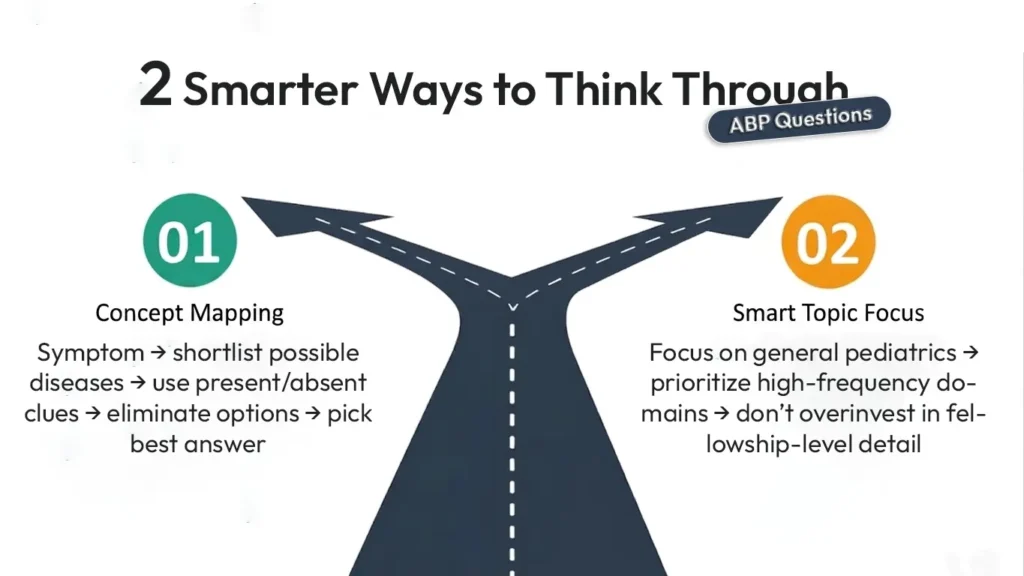
Pro Tip 1: Concept Mapping
When a clinical vignette feels overwhelming, anchor yourself to one key symptom. Ask: what single finding is most specific here? Then use that symptom as your filter.
From that one finding, map outward: which diseases cause it? Then narrow by asking what else is present or absent in the vignette. The presence of a rash, the absence of fever, the timing of symptom onset — each of these eliminates options and sharpens your reasoning.
Presence versus absence is everything. The ABP loves vignettes where one missing symptom rules out the obvious diagnosis. Train yourself to notice what the question does not say, not just what it does.
Pro Tip 2: Smart Topic Focus
The ABP tests what a competent general pediatrician is expected to know in clinical practice, not subspecialty fellowship depth. That distinction matters for how you study.
Prioritize topics that appear frequently across exam administrations and reflect core general pediatrics. These are the conditions a pediatrician would manage or triage in a general outpatient or inpatient setting. If a topic feels like fellowship-level subspecialty detail, it is probably not where you should spend the bulk of your hours.
Trying to cover everything is one of the most common and most costly board prep mistakes. The candidates who pass do not know everything. They know the high-yield material exceptionally well. Focus on what the board expects you to know, not everything you could theoretically learn.
Where Candidates Go Wrong Across These Domains
During preparation, many candidates follow study habits that seem productive but do not lead to strong exam performance. The issue is usually not effort, but how that effort is directed.
Without a clear strategy, it is easy to spend time on low-impact areas, rely on passive reading, or move through content without building real clinical understanding.
Improving efficiency comes from recognizing these patterns early and adjusting your approach to match how the exam actually tests knowledge.
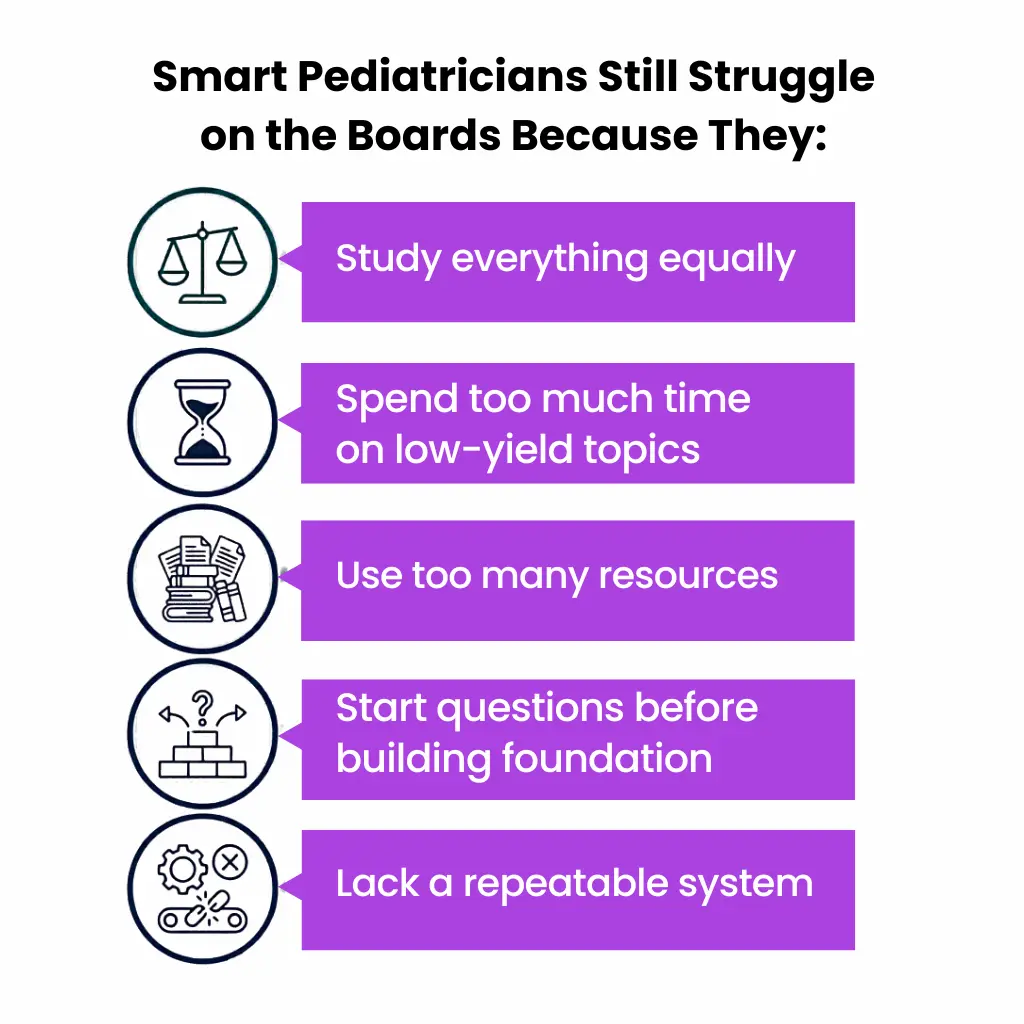
Common areas where efficiency is lost:
- Equal focus on all topics — high-weight domains need more time than low-frequency ones
- Passive reading habits — reading without recall does not build retention
- Switching between multiple resources — reduces depth and consistency
- Delaying difficult topics — complex areas need early and repeated exposure
- Using questions too early — questions test knowledge, they do not build it
- Lack of structured revision — without repetition, retention remains weak
High-Yield Study Strategies for Difficult Pediatric Board Topics
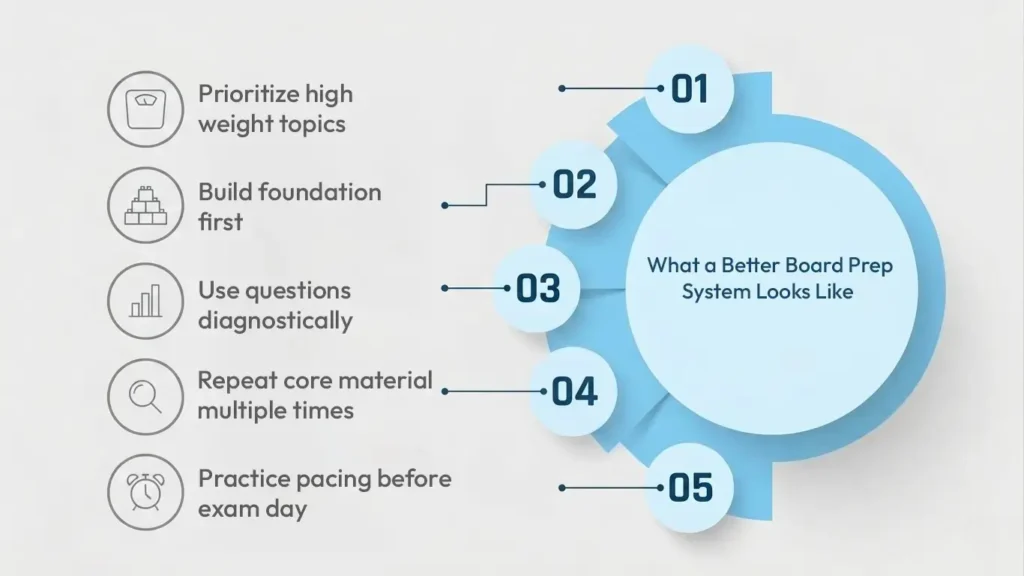
Passing the boards comes down to three pillars: content, test-taking strategy, and commitment. The candidates who pass are not the ones who studied the most hours. They are the ones who followed the right system. Here is what that system looks like in practice.
Prioritize High-Weight Pediatric Domains
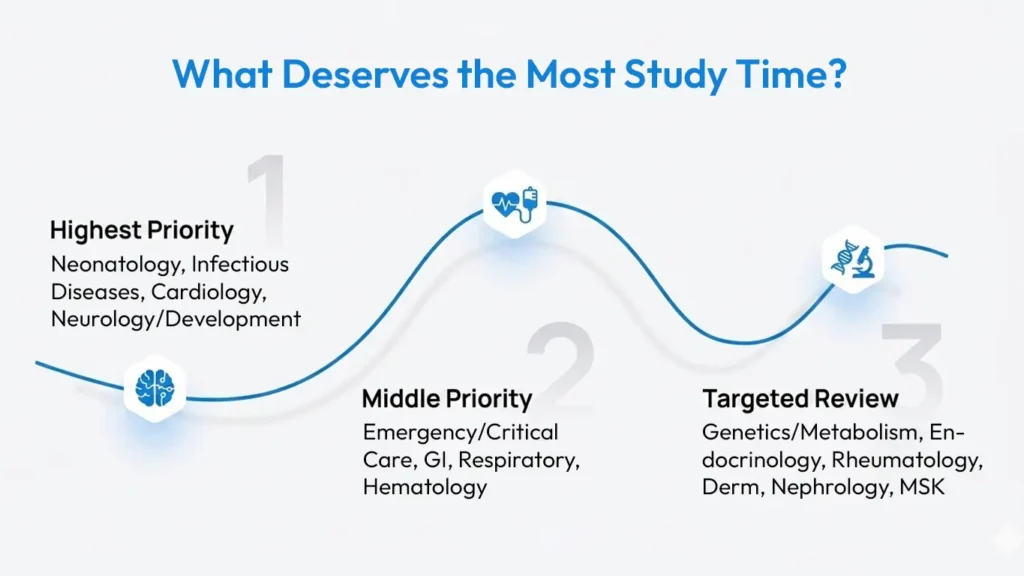
Build your study plan around domain weight, not personal comfort. The six domains above should receive proportionally more study time even if you already feel comfortable in some of them. Use the ABP content outline as a verification tool, not a study guide. Confirm that your board review system covers each domain, then follow the system. Do not build your own curriculum from scratch. For a ready-to-use framework, see our general pediatric board study plan.
Read Your Core Material at Least Five Times
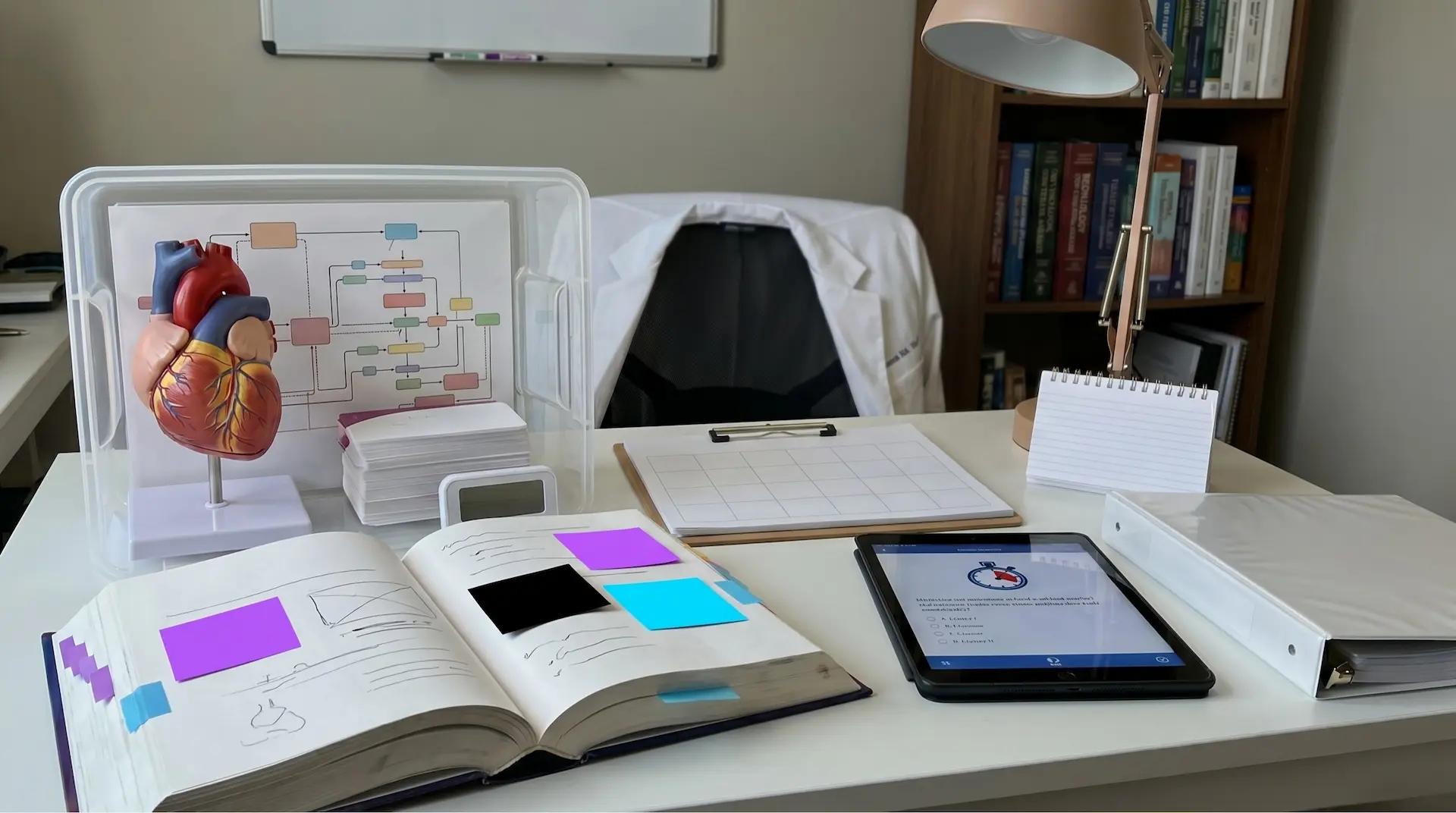
Pattern recognition is built through repetition, not a single read. PBR recommends a minimum of 300 study hours for lower-risk candidates and 500 or more for higher-risk candidates, spread across at least five passes through your core material. Use a color-coded highlighting system across each round: highlight what still needs review on each pass, switch to a darker shade each time, and skip anything not marked in the latest round.
By your fifth read, you should be reviewing only 20 to 30% of the content, the areas that have consistently given you trouble. For the full schedule built around this method, see our failed boards study schedule.
Use Questions to Test Strategy, Not Learn Content
Practice questions are a diagnostic tool, not a teaching resource. When you get one wrong, go back to your core material and rebuild the foundation. Do not rely on question explanations to fill knowledge gaps. Spend no more than five minutes per question including review, and tighten to 75 seconds as the exam approaches. See our guide on how many AAP PREP questions you actually need.
Start Early and Study Without Distractions
Start as early as January to allow maximum repetition and buffer for life getting in the way. Keep sessions long and uninterrupted. Deep, focused study is what allows complex topics like genetics and cardiology to actually stick. Not sure where your risk level falls? Take the free Risk Calculator on our Initial Certification page to get a personalized study path.
Best Resources for Mastering Difficult Pediatric Board Topics
A strong board review resource aligns with the ABP content outline, provides real depth for each domain, builds clinical reasoning, and uses built-in repetition to drive retention. Here is how PBR’s toolkit maps to exactly what the hardest topics require:
| Resource | What It Solves |
| 400-Page Core Study Guide | Deep, ABP aligned content coverage with built-in repetition for every high-weight domain |
| VAPP – Virtual Atlas of Pediatric Pictures | Visual pattern recognition for image-based questions in dermatology, genetics, and radiology |
| Live Test Taking Strategies Course | Clinical reasoning frameworks that make difficult vignettes manageable under time pressure |
| VIP Bundle | All resources combined plus structured study schedules and anxiety management tools |
| Free Risk Calculator | Personalized study plan based on your risk profile, timeline, and exam history |
| Multimodal Study Resources | Audio, video, print, and digital formats so you can study your way across all rounds of review |
Important: PBR members score well above the national mean, with an estimated 99% first-time pass rate based on over 10 years of data. We also offer a 100% Money-Back First-Time Pass Guarantee because we believe in what we have built. You can explore everything at pediatricsboardreview.com.
Common Study Mistakes Pediatric Board Candidates Should Avoid
Most performance gaps on the pediatric boards are not due to lack of effort. They usually come from inefficient study patterns, such as dividing time equally across topics, switching between too many resources, or relying on passive review.
Treating all topics equally. High-weight domains deserve more time. Equal allocation is not smart allocation. Focus your hours where the exam puts its weight, not where you feel most comfortable.
Studying from multiple resources. Jumping between multiple review books and videos leaves you a generalist in everything and an expert in nothing. Pick one high-yield resource, go deep on it, and repeat it enough times that the patterns become automatic.
Reading without active engagement. Passive review creates the feeling of studying without building retention. Summarize in your own words, use the highlighter method across multiple passes, and test yourself before moving on. If you cannot explain a concept without looking at it, you do not own it yet.
Starting with questions before building a foundation. Questions expose gaps, they do not fill them. A weak foundation means more questions just keep confirming it is weak. Build content knowledge first, then use questions to sharpen your test-taking strategy.
Avoiding difficult domains. Skipping genetics or cardiology because they feel overwhelming is one of the most predictable paths to struggling on exam day. Uncomfortable material needs more hours, not fewer.
Waiting too long to train pacing. Time management is a learnable skill. If you have not practiced under timed conditions before exam day, the 75-second clock becomes your biggest obstacle. Simulate exam blocks regularly in the final weeks of prep.
For a full breakdown of these patterns and how to fix each one, read our post on the top 7 mistakes to avoid when preparing for the pediatric boards.
Final Preparation Tips: How to Finish Strong on Exam Day
The final weeks before your exam are not for learning new material. They are for consolidating what you know and sharpening how you perform under pressure.
Time Management and Exam Day Strategy
By your final stretch of prep, every session should feel like the real exam: timed, structured, and pressure tested. Aim for 12 questions every 15 minutes. If you are consistently running over, fix your pacing now, not on test day.
On exam day:
- Skip the software tutorial. You have practiced the format already. Use those saved minutes strategically.
- Do not anchor on hard questions. Flag it, move forward, come back. Three minutes on one question is three minutes you do not have.
- Check the final 10 questions in each block early. Some straightforward items appear toward the end. Knowing they are there helps you pace the block more confidently.
- Register early. Prometric slots fill up, and your date choice affects your mental state more than most candidates expect.
For a deeper dive into exam day performance, check our post on passing the boards during crunch time.
Conclusion
The hardest topics on the ABP exam are not hard because the ABP is trying to trick you. They are hard because the material is genuinely complex, the volume is large, and pattern recognition takes real time to build. The candidates who pass are not the ones who studied the most hours. They are the ones who studied the right material, in the right order, using the right framework.
That means prioritizing high-weight domains, using questions as diagnostics rather than instruction, and following a structured system instead of improvising one. You do not have to figure this out alone. PBR has helped over 10,000 pediatricians pass, including many who failed multiple times before finally passing with a proven approach. And the latest 2025 board exam results show exactly what becomes possible when you prepare the right way.
Build a Smarter ABP Study Plan
Success on the ABP exam comes from using the right system, not just studying more. When you focus on high-yield topics and follow a structured approach, your preparation becomes more efficient and effective.
Pediatrics Board Review has helped over 10,000 pediatricians prepare with clarity and confidence, with an estimated 99% first-time pass rate.
Why PBR works:
- High-yield, exam-focused content
- Structured study system with repetition
- Practical test-taking strategies
Take the free Risk Calculator to get a study plan tailored to your timeline and exam goals.
Explore our Initial Certification Exam Courses | Browse All Products
FAQs
1. What are the hardest topics on the ABP pediatric board exam?
The most challenging domains are neonatology, infectious diseases, cardiology, neurology, and genetics. These areas combine high exam weight with complex clinical reasoning and limited residency exposure. Prioritize them early. They give you the greatest return on your study time.
2. How much of the ABP exam is neonatology?
Neonatology is consistently one of the highest-weight domains on the exam. Candidates who underinvest here tend to feel it on exam day. It is not a domain you can skim. It requires precise knowledge of clinical thresholds and decision points.
3. Is cardiology really that hard on the pediatric board exam?
Yes, because it tests physiology, not just disease names. Candidates who memorize cardiology without building the underlying hemodynamic framework struggle when questions are framed differently than expected. Build the framework first, then layer in the details.
4. How should I study genetics given limited clinical exposure?
Focus on a high-yield list of recognizable syndromes, inheritance patterns, and newborn screening abnormalities. Learn the clinical clues that make each condition identifiable on a vignette. A structured board review resource covers this far more efficiently than building your own approach from scratch.
5. How many study hours do I need for the pediatric board exam?
PBR recommends 300 hours minimum for lower-risk candidates and 500 hours for higher-risk candidates. The right number depends on your risk profile and timeline. Take the free PBR Risk Calculator to get a personalized plan in under 2 minutes.
6. How difficult is the pediatric board exam?
The pediatric board exam is challenging due to its breadth of topics, clinical reasoning demands, and time pressure. Many candidates struggle because they study broadly instead of focusing on high-yield areas. With a structured approach and repetition, it becomes much more manageable.
7. What is the pass rate for the pediatric board exam?
The ABP exam pass rate varies each year and depends on preparation level. While many pass on their first attempt, a notable number do not, often due to poor strategy. Reviewing pass rate trends and using structured resources can improve your chances.
8. What is the best way to prepare for the ABP exam?
The best approach is a structured study plan covering all core pediatric domains. Focus on high-yield topics, strengthen clinical reasoning, and review material multiple times. Consistent repetition with one solid system is more effective than using multiple resources.